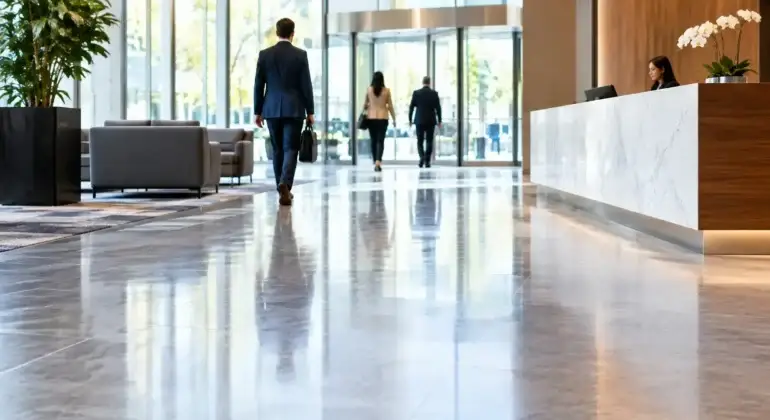

A lobby floor takes the first impact of every business day. Wet shoes, rolling luggage, delivery carts, salt, grit, spills, and constant foot traffic can quickly expose a finish that looked good only on a sample board. The best durable lobby flooring is not simply the hardest material available. It is the surface that suits the building’s traffic, maintenance plan, entry conditions, brand image, and budget for the long term.
For property managers, office tenants, retail operators, and hospitality businesses, the right flooring decision protects more than appearance. It can reduce cleaning demands, limit slip risks, control replacement costs, and help the entrance continue to make a professional first impression after years of use.
What the Best Durable Lobby Flooring Must Handle
A lobby is a transition zone between outdoors and indoors, which makes it harder on flooring than most interior spaces. Rain and snow are tracked inside, along with fine dirt that acts like sandpaper under shoes and cart wheels. In high-traffic buildings, the floor may be walked on continuously from opening to closing.
Start by assessing how the space is actually used. A small professional office with a covered entrance has different needs than a medical clinic, mixed-use residential building, retail center, or hotel. Consider peak traffic, whether carts or wheelchairs cross the floor, the amount of exterior moisture, the cleaning staff’s routine, and the likelihood of food or drink spills.
Slip resistance matters as much as wear resistance. A polished surface can be visually impressive, but it may be a poor choice near an exposed entrance unless it is paired with effective walk-off mats and a maintenance plan that keeps water under control. Floor transitions, entrance mats, proper drainage, and correctly selected grout or seams all affect how the finished lobby performs.
Best Durable Lobby Flooring Options Compared
Porcelain tile for high-traffic entrances
Commercial-grade porcelain tile is one of the strongest all-around choices for busy lobbies. It resists moisture, staining, scratching, and daily cleaning products better than many softer finishes. It is available in stone, concrete, wood, and modern large-format looks, allowing a durable floor to support almost any interior design direction.
Textured or matte porcelain is usually a more practical lobby choice than highly polished tile. It offers better traction and tends to hide small scratches, water marks, and tracked-in debris. For an entrance that sees winter weather or frequent rain, this distinction can make routine upkeep easier.
The trade-off is installation quality. Tile needs a properly prepared substrate, sound crack isolation where required, accurate layout, and durable grout. Large-format tile can create a clean, upscale appearance, but it demands a very flat floor and careful installation. A failed tile installation is expensive to repair because the issue often begins below the visible surface.
Terrazzo for long-term value
Terrazzo is a premium lobby material known for exceptional longevity. Its dense, polished surface can withstand heavy traffic for decades when it is properly installed and maintained. It also offers substantial design flexibility, from understated neutral blends to custom patterns, logos, and color fields.
This is often a strong option for institutional, hospitality, corporate, and multi-residential properties where the owner is planning for a long service life. Although the upfront cost is higher than most flooring systems, the life-cycle value can be compelling when a floor is expected to remain in place for many years.
Terrazzo is not the automatic answer for every project. It requires experienced installers, proper substrate conditions, and enough budget and schedule allowance for a specialty finish. It can also be slippery when wet if the finish and entry protection are not selected carefully.
Polished concrete for a modern commercial look
Polished concrete works well in contemporary offices, showrooms, industrial-style retail spaces, and mixed-use developments. When an existing concrete slab is in good condition, polishing can turn it into a durable, low-maintenance finish without adding a separate flooring layer.
A well-executed polished concrete floor resists heavy use and offers a clean, minimal appearance. It also works effectively with radiant heating and can be refreshed through periodic maintenance rather than fully replaced. For property owners who appreciate exposed material and a straightforward aesthetic, it can be a practical investment.
However, every slab has its own character. Cracks, patches, stains, and variations may remain visible after polishing. Concrete can also feel hard underfoot and become slick when wet, particularly near exterior doors. An experienced contractor should assess the slab before promising a particular finish level or appearance.
Luxury vinyl tile for flexibility and comfort
Commercial luxury vinyl tile, often called LVT, can be a sensible choice for office and retail lobbies with moderate to heavy traffic. Quality products offer strong wear layers, realistic visuals, easier underfoot comfort than tile or concrete, and relatively simple replacement if a localized area is damaged.
LVT performs best where moisture is controlled and the subfloor is properly prepared. It is not the first choice for an unprotected entrance that regularly receives standing water, snow melt, or grit. Seams, edges, and adhesive can be vulnerable if moisture management is overlooked.
For many tenant improvement projects, LVT is valuable because it balances appearance, budget, and installation speed. It can also be paired with porcelain tile at the immediate entry, creating a tougher wet-zone surface before transitioning to vinyl in the main reception area.
Natural stone for distinctive, carefully managed spaces
Stone such as granite, slate, or marble creates a memorable lobby, especially in higher-end residential, hospitality, and professional settings. Granite is generally more durable than marble and can handle traffic well when sealed and maintained correctly. Slate offers natural texture and character but varies by product and finish.
Natural stone requires a realistic maintenance commitment. Some stones can stain, etch, chip, or show wear more readily than owners expect. Marble, in particular, offers elegance but may not be practical for a hard-working public entrance. If stone is selected, choosing the right type, finish, sealer, and cleaning products is essential.
Design the Entry System, Not Just the Floor
Even the most durable flooring will wear prematurely if the entry is not designed to keep dirt and water outside. A properly sized walk-off mat system can capture moisture and grit before it reaches the lobby finish. Recessed mat wells are especially useful in high-traffic commercial entries because they reduce trip edges and create a cleaner, more intentional look.
The flooring layout should also account for transitions. Use materials that can handle the toughest conditions closest to the door, then move into finishes that support comfort or design goals farther inside. This approach often gives clients a better balance of durability and cost than installing the same premium material across the entire lobby.
Lighting plays a role as well. Dark glossy floors may show dust, salt residue, and water spots under bright overhead lighting. Mid-tone matte finishes, subtle patterns, and grout colors chosen for real-world conditions often keep the lobby looking presentable between cleanings.
Installation Details That Protect the Investment
Durable flooring begins with a stable, properly prepared base. Before installation, the contractor should evaluate moisture levels, slab flatness, cracks, existing flooring conditions, and height transitions at doors and adjacent rooms. Skipping this work can lead to loose tile, failed adhesive, uneven joints, or premature wear.
Commercial flooring also needs to meet practical building requirements. That may include accessibility considerations, appropriate transition profiles, slip resistance, fire ratings, and coordination with doors, baseboards, glass partitions, and millwork. These details are easier to manage when one accountable construction team coordinates the flooring with the rest of the interior work.
At Shivaji Construction Ltd., flooring is approached as part of the complete commercial environment, not as an isolated finish. Coordinating demolition, substrate repair, flooring installation, trim, painting, and final cleanup helps protect the schedule and delivers a lobby that is ready for daily use.
Choose for the Next Five Years, Not Opening Day
A flooring sample can look convincing under showroom lights, but the better question is how it will look after thousands of visitors have crossed it. Ask for materials appropriate to your traffic level, plan for entry mats and cleaning access, and budget for professional preparation beneath the visible surface.
The right lobby floor should welcome people in, stand up to the conditions outside your door, and make building management easier long after the project is complete.