
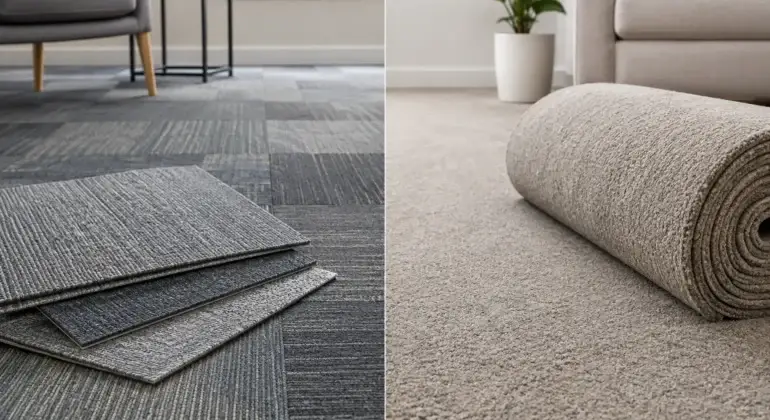

A flooring decision can affect how a workplace looks, sounds, cleans, and performs for years. When comparing carpet tiles versus broadloom carpet, the right answer is rarely based on appearance alone. Traffic patterns, maintenance expectations, access requirements, installation timing, and the character of the space all deserve consideration before materials are ordered.
For offices, retail stores, clinics, hospitality spaces, and tenant improvements, carpet is more than a finish selection. It helps manage acoustics, creates visual zones, supports employee and customer comfort, and contributes to the overall impression of the property. The best choice is the one that fits the way the space will actually be used.
Carpet Tiles Versus Broadloom Carpet: The Core Difference
Carpet tile is manufactured in individual squares or planks, commonly 18 by 18 inches, 24 by 24 inches, or larger formats. Each piece is installed independently, often with pressure-sensitive adhesive or a specialized backing system. Patterns can run in a single direction, alternate, or be arranged to create more visual movement across the floor.
Broadloom carpet is supplied in rolls and installed as a continuous surface across a room or suite. It is typically stretched over pad or adhered directly to the subfloor, depending on the product and project requirements. Because there are fewer visible breaks in the material, broadloom provides a more uniform, traditional carpet appearance.
Neither option is automatically better. Carpet tile often suits spaces that need practical serviceability, while broadloom can be the stronger design choice where an uninterrupted, softer look is the priority.
Why Commercial Spaces Often Choose Carpet Tile
Carpet tile is a common choice for commercial interiors because it makes future maintenance more manageable. If a section is stained, damaged by a rolling chair, or affected by a leak, the affected tiles can often be removed and replaced without disturbing the surrounding floor. For property managers and business owners, that can reduce disruption and avoid replacing carpet that is still in good condition.
This benefit matters in busy corridors, reception areas, open offices, meeting rooms, and workstations. Coffee spills, printer toner, muddy footwear, and everyday wear tend to concentrate in particular areas rather than across an entire floor. Keeping a small quantity of matching replacement tiles on site can make repairs faster and preserve a consistent appearance.
Carpet tiles also provide design flexibility. A project can use one color in private offices, another in circulation paths, and an accent pattern near reception or collaboration areas. This approach can help guide traffic, establish departments, or reinforce a brand palette without introducing hard flooring transitions.
Installation can be another practical advantage. Tiles are easier to transport through elevators and tight access points than full rolls of carpet. They also create less material waste in rooms with irregular shapes, columns, or multiple door openings. On an occupied renovation, installers may be able to phase work in smaller sections so the business can continue operating with less interruption.
There are trade-offs. Individual tiles create joints, even when those joints are designed to be subtle. The floor needs careful layout and proper preparation to avoid visible alignment issues. Product batches should also be managed carefully, since replacement tiles ordered years later may vary slightly from the original run.
When Broadloom Carpet Is the Better Fit
Broadloom carpet remains an excellent choice where comfort, visual continuity, and a more refined finish are the leading priorities. It is often well suited to executive offices, hospitality rooms, private lounges, multifamily common areas, and other spaces where a residential feel is part of the design intent.
Without the grid pattern of carpet tile, broadloom can make a room feel quieter and more expansive. It is available in a wide range of textures, cut piles, loop piles, patterns, and custom design options. A carefully selected broadloom product can add warmth to a space that might otherwise feel overly hard or institutional.
Underfoot comfort is another consideration. Broadloom installed over quality padding can feel noticeably softer than most commercial carpet tile systems. That may be valuable in areas where people stand, sit, or spend long periods, especially in hospitality and client-facing environments.
The limitation is repair. A stain or burn in a broadloom installation may require patching, and a patch can be difficult to disguise depending on the pile direction, dye lot, and age of the carpet. If damage is widespread, replacing a larger section or the full room may be the most practical solution. Broadloom also requires more planning when bringing material into upper floors or constrained commercial sites.
Compare Performance Where It Matters Most
A flooring material should be selected according to the demands of the building, not simply the initial price per square foot. The following factors usually have the greatest effect on long-term satisfaction:
- Maintenance and replacement: Carpet tile generally makes localized repairs easier. Broadloom can be cleaned effectively, but spot repairs are more challenging to conceal.
- Appearance: Broadloom offers a continuous, polished surface. Carpet tile provides greater opportunity for color blocking, directional patterns, and modular layouts.
- Traffic and wear: Both can perform well when the product is rated for commercial use. Carpet tile is especially practical where wear is concentrated along paths and entrances.
- Comfort and acoustics: Both reduce noise compared with hard flooring. Broadloom with padding often provides a softer feel, while dense commercial tile can offer excellent sound absorption in active offices.
- Installation conditions: Carpet tile can be easier to phase in occupied spaces and around complex floor plans. Broadloom may be more efficient in large, open rooms with straightforward access.
The subfloor condition is equally important. Uneven concrete, moisture concerns, old adhesive, and damaged underlayment can compromise either flooring system. Proper site assessment and preparation protect the finished appearance and help prevent premature failure.
Cost Should Be Measured Over the Life of the Floor
Broadloom may appear more cost-effective at the time of purchase, particularly for large open areas. Carpet tile can have a higher initial material cost, depending on the selected product and backing system. However, initial pricing is only part of the decision.
For a high-traffic office or retail environment, the ability to replace a limited number of carpet tiles can lower future repair costs. This is especially useful when a tenant expects frequent reconfigurations, heavy chair movement, or regular public traffic. A broadloom installation may offer better value when the area is lower risk, visually important, and unlikely to experience localized damage.
Labor, floor preparation, furniture moving, disposal, and business downtime should be included in the budget discussion. A detailed estimate should identify these items clearly so there are no surprises once the project begins. Selecting a lower-priced carpet without considering installation requirements or maintenance needs can cost more over time.
Choose the Right Carpet for the Room, Not the Trend
A practical approach is to select flooring by zone. Carpet tile may be the sensible choice for open work areas, hallways, conference rooms, and service corridors. Broadloom may be better suited to an executive suite, a boutique hospitality setting, or a client lounge where comfort and visual impact carry more weight.
Some projects benefit from both. A commercial interior can use carpet tile in durable, high-use areas while using broadloom in quieter rooms that need a more elevated finish. Coordinating color, texture, and transition details allows the materials to work together rather than compete.
For projects in Vancouver and the Lower Mainland, it is also wise to consider wet-weather conditions. Entry zones need effective walk-off systems and flooring that can handle moisture tracked in from outdoors. No carpet performs well when water is allowed to sit on the surface or penetrate the backing, so entry design and regular cleaning procedures matter as much as the carpet selection itself.
Plan Installation Around the Finished Space
The best flooring installation starts before materials arrive. Furniture, equipment, partitions, electrical floor boxes, door clearances, and transitions to adjacent flooring all need to be reviewed. A contractor should also confirm moisture conditions, substrate requirements, adhesive compatibility, and the manufacturer’s installation standards.
For tenant improvements, flooring is often installed near the end of construction, after dusty work such as framing, drywall sanding, ceiling work, and painting is complete. Protecting new carpet from other trades is essential. Clean jobsites, careful sequencing, and clear communication help keep the finished floor free from avoidable damage.
Shivaji Construction approaches commercial flooring as part of the larger interior build, coordinating preparation, installation, finishing details, and the trades around it. That single point of accountability helps clients make material decisions with the full project scope in view.
The most useful question is not whether carpet tile or broadloom is universally better. It is which material will still serve your space well after the first busy season, the first spill, the first layout change, and the first maintenance cycle. Choose for the realities of the room, and the flooring will continue to support the quality of the space long after the project is complete.