
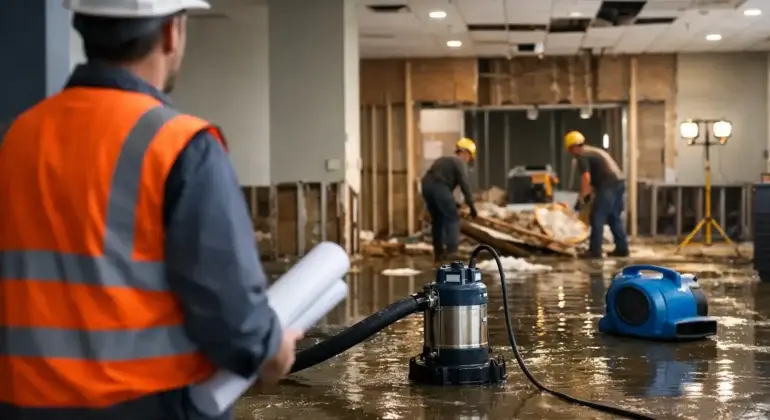

A flood in a retail store, office, restaurant, or multi-tenant building creates more than a cleanup problem. Wet drywall, saturated flooring, damaged insulation, and compromised finishes can delay reopening, affect tenants, and create long-term repair costs if handled poorly. A qualified commercial flood repair contractor helps move the property from water damage to a safe, durable, business-ready space with one clear plan.
The right response is rarely just replacing what looks damaged. Commercial flood repair requires careful decisions about drying, demolition, materials, building systems, scheduling, and code-aware reconstruction. For property owners and managers, the goal is not simply to make the space look normal again. It is to restore it properly, protect the investment, and reduce disruption to the people who depend on the building.
The First Priority Is Containing Damage
Before reconstruction begins, the source of water must be stopped and the affected area assessed. Depending on the event, this may involve a burst pipe, roof leak, appliance failure, sprinkler discharge, sewer backup, or water entering through an exterior opening.
Standing water should be removed quickly, but visible water is only part of the issue. Moisture can travel beneath flooring, behind baseboards, inside wall cavities, and into insulation. If wet materials are covered over before they are properly dried or removed, mold growth, odors, staining, and material failure can follow.
A commercial project also requires attention to business operations. A contractor should help identify which areas need to be isolated, what can remain accessible, and whether repairs can be phased to keep part of the operation open. A small office suite may need a direct, fast rebuild. A larger retail or hospitality space may require a staged plan that protects customers, staff, inventory, and neighboring tenants.
What a Commercial Flood Repair Contractor Should Manage
Flood repair becomes complicated when several trades are needed at once. After mitigation and drying have been addressed, the reconstruction phase can include demolition, framing, insulation, drywall, taping, painting, flooring, ceilings, doors, millwork, glass, and finish carpentry.
Hiring separate trades independently can work on a very limited repair, but it often creates gaps in responsibility. One trade may wait for another to finish, materials may be ordered late, and the property manager may be left coordinating schedules and resolving issues. A full-service commercial flood repair contractor provides one accountable point of contact across the rebuilding process.
That coordination matters most when the water has affected more than finishes. For example, removing damaged drywall may expose framing, electrical pathways, insulation, or areas that need additional repairs. A dependable contractor identifies these conditions early, explains the options, and documents changes before work moves forward.
A proper repair plan should account for:
- Safe removal of damaged materials and protection of unaffected areas
- Drywall, insulation, framing, ceiling, and flooring replacement
- Matching existing finishes where practical and recommending durable alternatives where needed
- Coordination with qualified specialists when electrical, plumbing, mechanical, or fire protection systems are affected
- Clean jobsite practices, clear scheduling, and final finishing that supports a professional reopening
The scope depends on the type of flooding and how long materials remained wet. Clean water from a supply line may allow more materials to be saved if drying begins immediately. Water from a sewer backup or another contaminated source can require more extensive removal and cleaning. A contractor should not assume that every surface can be repaired or that every material must be replaced. The right approach is based on the condition of the building, moisture findings, health considerations, and the intended use of the space.
Choosing the Right Commercial Flood Repair Contractor
When business operations are affected, speed matters. So does judgment. Choosing the first available contractor without reviewing their repair process can lead to rushed work that becomes visible months later through warped flooring, cracking drywall, recurring odors, or failing paint.
Look for a contractor with experience managing commercial interiors and multiple trades. They should be able to provide a detailed estimate that separates demolition, repairs, materials, and any allowances or variables. Clear estimates make it easier to compare proposals and understand what is included before work begins.
Ask how the contractor will communicate during the project. Flood repairs often uncover conditions that were not visible on day one. A professional team should explain what they find, discuss the cost and schedule impact, and obtain approval for legitimate changes rather than presenting surprises at the end.
Insurance, licensing, and workplace safety practices deserve equal attention. Commercial owners and managers need a contractor that carries appropriate insurance, follows site safety requirements, and can work responsibly in occupied or shared buildings. This is especially important in office complexes, retail centers, strata properties, restaurants, and facilities where public access must be controlled.
Rebuild for Better Performance, Not Just Appearance
Flood repair is also an opportunity to correct weaknesses that may have contributed to the damage or made it worse. A replacement is not always identical to the original. In some cases, a more durable flooring selection, improved wall protection, better moisture-resistant materials, or a revised layout can make the space easier to maintain in the future.
That does not mean every flood repair needs to become a full renovation. Budget, lease obligations, insurance coverage, and reopening deadlines all matter. The best recommendations focus on what will provide real value for the property rather than adding unnecessary scope.
For a retail space, that might mean selecting a commercial flooring system that can handle heavy foot traffic and routine cleaning. For an office, it may mean replacing damaged acoustic ceiling components while improving access to building systems. In a restaurant or hospitality setting, repairs may need to consider sanitation, durable wall finishes, and a schedule that minimizes lost service time.
Shivaji Construction approaches commercial interior work as a coordinated process, bringing demolition, drywall, ceilings, flooring, painting, doors, millwork, and finishing work under one managed team. That single-contractor approach helps clients maintain visibility over the schedule, the scope, and the quality of the finished space.
Keep Documentation Clear From Start to Finish
Flood repairs can involve insurers, landlords, tenants, property managers, and business owners with different responsibilities. Clear documentation helps everyone make decisions faster. Keep copies of photos, estimates, approved changes, invoices, moisture-related reports where applicable, and material selections.
A contractor should also establish practical expectations at the start. Discuss access hours, building rules, noise restrictions, elevator use, debris removal, parking, security procedures, and who has authority to approve changes. These details may seem minor compared with the visible damage, but they often determine whether a commercial repair stays organized.
The final walkthrough should be treated as more than a formality. Review finish quality, door operation, flooring transitions, paint consistency, ceiling work, cleanup, and any areas affected by the repair. A well-managed project ends with a space that is functional, presentable, and ready to support normal operations again.
Flood damage puts pressure on every decision, especially when revenue, tenants, or customers are affected. Take the time to choose a contractor who communicates clearly, coordinates the required trades, and stands behind the details of the rebuild. A careful repair protects more than the building – it helps your business regain its footing with confidence.




What Affects Drywall Repair Pricing for Your Space - Shivaji Construction
[…] or expand to include removal of compromised materials and coordination with plumbing, roofing, or restoration work. This can affect pricing, but it also protects the property from mold, staining, repeat repairs, […]