
A small drywall hole can look like a quick fix until the repair has to disappear into a finished office, retail space, lobby, or home. That is why understanding what affects drywall repair pricing matters before work begins. The visible damage is only one part of the scope. The condition behind the wall, the finish standard, site access, and the work required to protect an occupied space can all influence the final estimate.
For property owners, managers, and homeowners, the right question is not simply, “What does drywall repair cost?” It is, “What work is needed to restore this wall properly and prevent the same issue from returning?” A detailed estimate should answer that question clearly.
What Affects Drywall Repair Pricing Most?
Drywall repair pricing is based on the total work required to deliver a durable, clean, paint-ready result. Contractors evaluate the damaged area, determine what caused it, and consider how the work will be completed without disrupting the rest of the property.
A small dent from furniture or a door handle is usually straightforward. A cracked ceiling below a plumbing leak, a damaged wall in a busy medical office, or a large opening left after electrical work requires more coordination, materials, and skilled finishing. Two repairs that appear similar at first glance may have very different scopes once the area is opened and inspected.
Size, depth, and type of damage
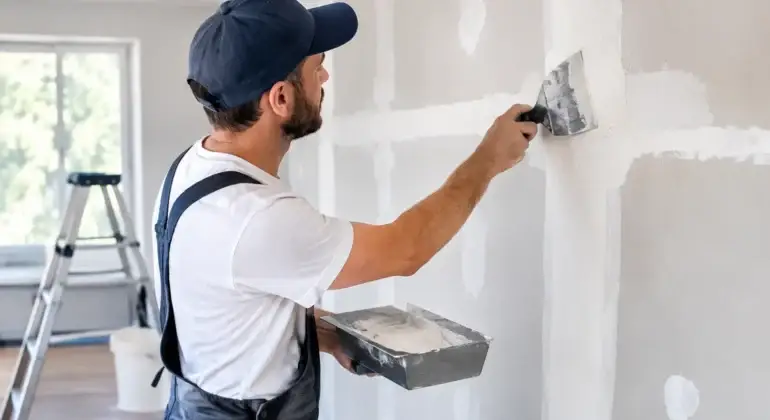
The size of the damaged area affects material use and labor time, but depth is often just as important. Surface scuffs, nail pops, and shallow dents may need minor filling, sanding, priming, and paint touch-up. Larger holes may require a new drywall patch, backing material, fasteners, joint compound, tape, texture matching, and several drying and sanding stages.
Damage that reaches framing, insulation, vapor barriers, wiring, or plumbing can add to the repair scope. If the wall has softened, crumbled, or bowed because of ongoing moisture, replacing only the visible drywall is rarely the right long-term solution.
Ceiling repairs can also cost more than comparable wall repairs. Working overhead is slower, requires more site protection, and often involves matching a broad, highly visible surface. Water-damaged ceilings may need investigation above the drywall before repairs can proceed.
The cause of the damage
A professional repair should address the cause, not just cover the evidence. Moisture intrusion, plumbing leaks, roof leaks, condensation, impact damage, settlement cracks, and poorly completed prior work all call for different solutions.
For example, a wall damaged by a one-time leak may be repaired once the source is fixed and the area is fully dry. If moisture is still present, the repair may need to wait or expand to include removal of compromised materials and coordination with plumbing, roofing, or restoration work. This can affect pricing, but it also protects the property from mold, staining, repeat repairs, and damage to adjacent finishes.
Cracks require the same careful judgment. Some are cosmetic and can be repaired as part of routine maintenance. Others may point to movement at drywall joints, framing changes, or a broader structural concern. A contractor should explain the likely cause and recommend an appropriate repair rather than promising that every crack can be permanently eliminated with compound alone.
Access, Occupancy, and Site Conditions
The repair location has a direct effect on drywall repair pricing. An open, vacant room with clear floor space is faster to work in than a reception area full of furniture, a tenant suite operating during business hours, or a finished home with delicate flooring and built-in millwork.
In commercial properties, work may need to happen after hours, during weekends, or in carefully planned phases to limit disruption to employees, customers, and tenants. Crews may need to set up dust containment, protect flooring and furniture, maintain safe walkways, coordinate building access, or follow property management requirements. Those measures are valuable because they help keep the site clean, safe, and functional, but they require additional planning and labor.
High ceilings, stairwells, tight corridors, and difficult parking or loading conditions can also affect the estimate. A repair that needs ladders, lifts, or specialized access equipment carries a different labor and safety requirement than a repair at standard wall height.
Protection and cleanup requirements
Dust control is not an optional detail in a well-managed drywall repair. Sanding joint compound creates fine dust that can travel beyond the immediate work area. In occupied offices, retail stores, hospitality spaces, and homes, proper containment and daily cleanup help protect finishes, equipment, inventory, and indoor air quality.
The amount of protection needed depends on the environment. Repairing drywall in an empty shell is different from working beside computers, merchandise, kitchen cabinetry, or occupied living areas. A transparent estimate should account for preparation, containment, debris removal, and final cleanup, not only the patch itself.
Finish Quality Can Change the Scope
Drywall is one of the most visible finish surfaces in any interior. Even a structurally sound patch can look poor if the seams, texture, paint sheen, or surrounding surface are not handled carefully. This is why finish expectations are a major part of pricing.
A utility room may only require a functional, paint-ready patch. A boardroom feature wall, luxury home interior, retail showroom, or brightly lit hallway may demand a higher level of finishing. Flat, smooth walls show imperfections easily under direct lighting, especially when sunlight or linear fixtures hit the surface at an angle.
Texture matching is another variable. Orange peel, knockdown, popcorn ceilings, hand trowel finishes, and older custom textures can be difficult to replicate exactly. The goal is to blend the repaired area as naturally as possible, but age, past repainting, and inconsistent original texture can limit a perfect match. Setting this expectation early avoids surprises after the repair is complete.
Painting and color matching
Drywall repair and painting are closely connected. A repaired area generally needs primer before paint, and touch-up painting may not blend with the surrounding wall even when the original color is known. Sun exposure, wear, previous paint batches, and sheen differences can make a small patch visible.
In some cases, painting the full wall is the best way to achieve a consistent finish. In larger commercial spaces, it may be more practical to repaint a complete section or room. Including paint work in the repair scope can increase the initial price, but it often produces a more professional result than trying to spot-paint a highly visible area.
Materials, Code Requirements, and Specialized Assemblies
Not all drywall is standard drywall. Commercial and residential interiors may include moisture-resistant board, impact-resistant panels, sound-rated assemblies, fire-rated drywall, insulation, vapor control layers, or metal stud framing. Repairing these assemblies correctly may require specific materials and installation methods.
Fire-rated walls and ceilings deserve particular attention. These systems may separate suites, corridors, utility areas, or occupancies, and an improper repair can compromise the assembly’s intended performance. The repair may need to maintain the original board type, thickness, joint treatment, insulation, sealants, and penetrations. This is not work to price solely by square footage.
Older buildings can introduce additional uncertainty. Hidden conditions, outdated wiring, previous repairs, or materials that require special handling may only become apparent after the damaged area is opened. A responsible contractor will identify foreseeable risks upfront and communicate promptly if site conditions require a change in scope.
Why Detailed Estimates Provide Better Value
The lowest price is not always the lowest cost. An estimate that leaves out moisture investigation, protection, finishing, priming, painting, cleanup, or access requirements may look attractive at first but create change orders or disappointing results later.
A clear drywall repair estimate should explain the damaged area, proposed repair method, materials, finish level, painting assumptions, access needs, and exclusions. It should also distinguish between confirmed work and conditions that cannot be verified until the wall or ceiling is opened. That level of detail gives clients a practical basis for comparing proposals.
For multi-trade repairs, one accountable contractor can simplify coordination. Shivaji Construction helps clients manage drywall, framing, insulation, painting, and related interior work through a single point of contact, with an emphasis on clean worksites and straightforward communication.
Before approving a repair, ask for a site assessment that looks beyond the surface. A properly scoped drywall repair protects the appearance of the space today while helping you avoid a more disruptive problem tomorrow.