
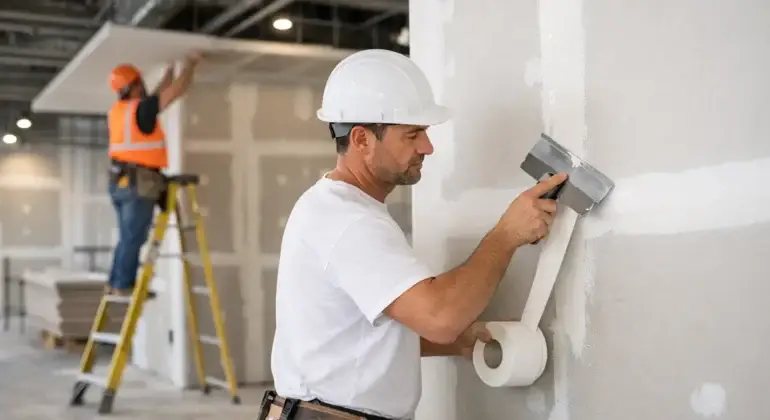

A new office wall can look complete as soon as the drywall is hung, but the real quality of the space is decided in the finish. Drywall installation and taping determine whether walls appear straight under bright lighting, whether paint holds its clean appearance, and whether the finished interior feels built for daily use rather than rushed for turnover.
For commercial tenant improvements, retail build-outs, hospitality spaces, and high-end renovations, drywall is not simply a background material. It creates the surfaces clients, employees, customers, and inspectors see every day. A properly planned system also supports fire ratings, acoustics, insulation, door and window details, and the coordinated work of electrical, mechanical, painting, millwork, and flooring trades.
Why Drywall Work Has Such a Visible Impact
Drywall is often installed after framing, rough-in work, and insulation are complete. That timing makes it a major transition point in a project. Once walls are closed, access to wiring, plumbing, blocking, and in-wall systems becomes limited. Careful coordination before installation prevents expensive openings and repairs later.
The finished result also reveals small mistakes. A slightly uneven board edge, poorly placed fastener, or weak joint may not be obvious during installation. Under sunlight, track lighting, glossy paint, or long corridor sightlines, however, those imperfections can become highly visible. In a professional setting, wall finishes affect how polished the entire property feels.
Quality drywall work balances appearance with performance. The right board type, thickness, fastening pattern, joint treatment, and finish level depend on the room’s purpose. A standard office partition has different needs than a restaurant kitchen, medical clinic, washroom, elevator lobby, or acoustic meeting room.
Planning Drywall Installation and Taping Before Walls Close
The best drywall installation and taping projects begin with a review of the drawings, scope, and existing conditions. This is especially important in occupied buildings, where crews may need to protect public areas, work around operating businesses, control dust, and meet a strict construction window.
Before board installation starts, the framing should be checked for straightness, alignment, and proper backing. Openings for doors, glazing, access panels, electrical boxes, and HVAC grilles must be confirmed. Wood blocking or steel backing may be needed for wall-mounted televisions, cabinets, handrails, shelving, washroom accessories, and millwork. Adding it before drywall is faster and more secure than trying to reinforce a finished wall later.
Material selection deserves the same attention. Standard gypsum board may suit dry interior areas, while moisture-resistant board is appropriate in areas exposed to humidity. Type X drywall may be required where a fire-rated assembly is specified. Abuse-resistant panels can be a worthwhile investment in corridors, schools, service areas, and other high-traffic environments. The correct material is not always the lowest-cost option upfront, but it can reduce maintenance and replacement costs over the life of the space.
A contractor should also verify whether the wall assembly must meet fire, sound, or code requirements. These assemblies depend on more than the drywall itself. Stud spacing, insulation, sealants, penetrations, joint treatment, and installation methods all play a role. Substituting materials or overlooking a detail can compromise the intended rating.
Sequencing Protects the Schedule
Drywall crews work most efficiently when the preceding trades are truly ready. Insulation should be complete, inspections passed where required, and rough electrical, plumbing, and mechanical work confirmed. Starting too soon often creates a cycle of board removal, patching, and rework.
After hanging, taping requires drying time between coats. Temperature, ventilation, humidity, and the number of coats affect that schedule. Rushing the process can lead to cracking, visible joints, or surface defects that show after painting. A realistic project plan gives the finishing work the time it needs while coordinating painters, ceiling installers, flooring crews, and final fixtures.
What a Professional Drywall Finish Includes
Hanging drywall correctly means placing boards in a pattern that reduces weak points, keeps joints properly supported, and avoids unnecessary seams. Sheets should fit closely without forcing them into place. Fasteners must be set at the correct depth: too shallow, and they remain visible; too deep, and they can break the paper face and lose holding strength.
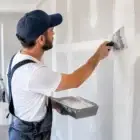
Taping is the process that turns separate sheets into a continuous wall surface. Joint compound and tape are applied to flat seams, inside corners, outside corners, fasteners, and trim details. Each coat is feathered wider than the last so transitions disappear once the wall is primed and painted.
This work calls for patience as much as technique. Mud that is applied too heavily can take longer to dry and require excessive sanding. Coats that are too thin may not properly conceal the joint. Poor sanding can leave ridges, scratches, or inconsistent texture. The goal is a smooth, durable surface without overworking the material or filling the jobsite with avoidable dust.
Finish level matters as well. Basic utility areas may need a simpler finish, while reception areas, executive offices, and spaces with strong directional lighting often require a higher level of preparation. Dark paint colors, satin or gloss finishes, and feature-wall lighting make imperfections more noticeable. Discussing these conditions before work begins helps set the correct scope and avoids surprises at the painting stage.
Corners, Transitions, and Repairs Need Extra Care
Corners and transitions receive more impact than broad wall areas. Metal, vinyl, or paper-faced corner bead may be selected based on the location and expected wear. In retail spaces, hallways, and service areas, durable corner protection can help walls withstand carts, furniture moves, and everyday traffic.
Drywall also meets many other finishes: door frames, suspended ceilings, glass partitions, tile, baseboards, millwork, and existing walls. Clean lines at these transitions are a sign of careful planning. When several trades are coordinated by one accountable contractor, potential conflicts are easier to identify before they affect the finish.
Repairs deserve the same disciplined approach. A quick patch may hide a hole temporarily, but a lasting repair requires proper backing, secure board replacement where needed, tape, multiple compound coats, sanding, and texture or paint matching. This is particularly important when restoring spaces after tenant changes, water damage, or new mechanical and electrical work.
Common Shortcuts That Create Costly Results
The most frequent drywall problems are usually preventable. Skipping a framing check can create uneven walls that no amount of compound can fully correct. Closing walls before inspections or trade sign-offs leads to reopening finished areas. Using the wrong board in a damp area can contribute to deterioration and recurring repairs.
Another common issue is treating taping as an isolated task rather than part of the entire finish system. Wall preparation, primer, paint sheen, lighting, and building movement all influence the final appearance. A competent contractor considers these conditions early instead of blaming the final coat of paint for problems created during the earlier stages.
Price should be evaluated in the same way. A detailed estimate should clarify the scope of demolition, framing repairs, drywall materials, insulation, finishing level, dust control, painting preparation, and site protection. The lowest number may exclude the work needed for a truly finished result. Clear scope and responsive communication provide a more reliable basis for comparing proposals.
Choosing the Right Team for Your Project
Commercial drywall work affects multiple trades, schedules, and code-sensitive assemblies. Property managers and business owners benefit from a contractor who can coordinate the full interior process, maintain a clean site, communicate changes promptly, and stand behind the workmanship.
Ask how the team handles rated assemblies, occupied-site protection, change requests, and quality checks before painting. Confirm that the contractor is properly licensed, insured, and compliant with applicable workplace safety requirements. For projects across Delta, Vancouver, Surrey, Burnaby, and the Lower Mainland, Shivaji Construction Ltd. brings drywall, taping, framing, insulation, ceilings, painting, and finishing work under one coordinated team.
A well-finished wall should never become the center of attention. It should make the room feel straight, clean, durable, and ready for business. Starting with the right plan and the right crew gives your space the quiet, lasting quality people notice without having to think about why.

Choosing a Suspended Ceiling Installation Contractor - Shivaji Construction
[…] best result comes from looking at the ceiling as part of the full interior system. Framing and drywall, insulation, mechanical rough-ins, electrical work, painting, and flooring all affect the sequence […]
How to Install Acoustic Ceilings in Commercial Spaces - Shivaji Construction
[…] cameras, access panels, and exit signs. This is where one coordinated contractor adds real value. Framing, drywall, electrical, HVAC, and fire protection work affect the ceiling layout, and resolving conflicts […]